Advanced Bioanalytical Research at KMU: A Perspective on Interdisciplinary Science
Jeganathan Chinnadurai
Fourth-year Ph.D student in the program in Life Sciences, KMU
Master of Science, Bharathidasan University
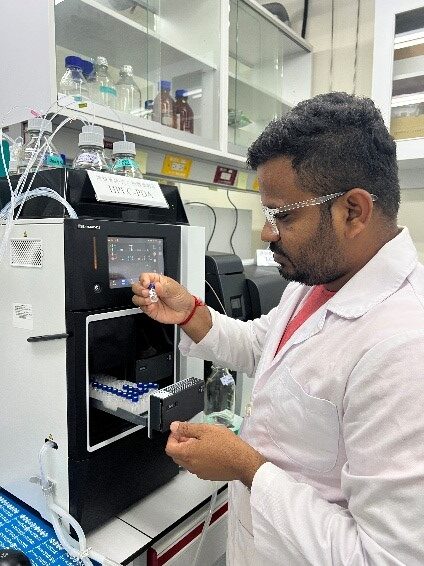
My research specializes in bioanalytical chemistry and omics (breathomics and lipidomics). I focus on identifying and quantifying biomarkers, as well as on advanced sample preparation and analytical techniques, including mass spectrometry, thermal desorption, and targeted and untargeted metabolomics. I have been in Taiwan for 3 years, pursuing his passion for understanding the environmental health impacts of everyday exposures.
Brief Study Experience Sharing in Taiwan:
My motivation to pursue research in environmental health stems from a deep concern about how our daily activities, even something as simple as cooking, can affect long-term health outcomes. This curiosity led me to Taiwan to pursue my PhD in Life Sciences, where I’ve explored the intersection of environmental chemistry, omics technologies, and cardiovascular, kidney, and metabolic health.
Throughout my PhD, I’ve mastered sophisticated analytical instruments, particularly LC-MS/MS and GC-MS/MS, for omics and quantification applications. One of my proudest achievements has been publishing 4 research articles and securing one patent over the past 3 years, alongside the systematic development of comprehensive breathomics and lipidomics protocols. The process of refining my methodological approaches and learning when to pivot from theoretical frameworks to evidence-based strategies has taught me invaluable lessons about adaptability in research. And also, I went to Japan for the Conference associated with the research innovation competition and got the Gold medal.
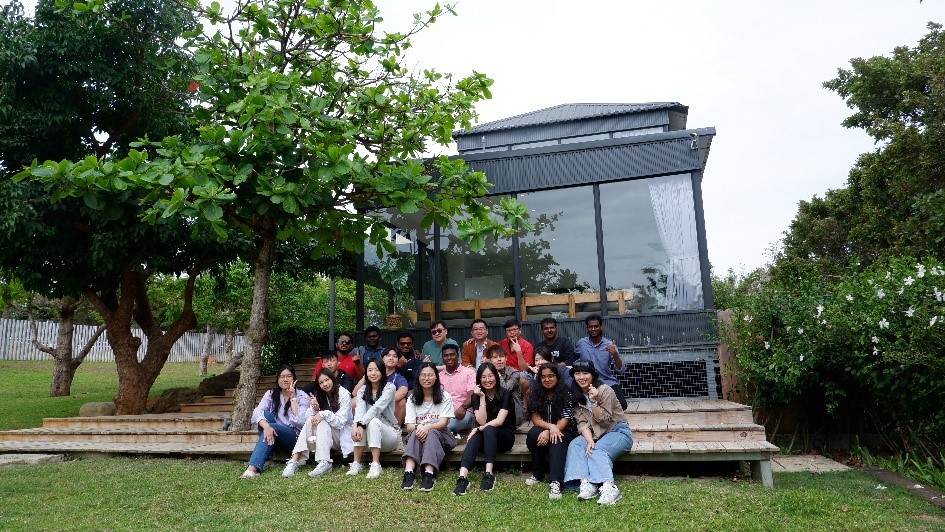
In addition to my laboratory work, I’ve had the privilege of engaging in multiple collaborations that have broadened my scientific perspective. Beyond research, I found balance and joy through lab parties, lab trips, and various group activities. These experiences have not only enriched my understanding of Taiwanese culture but also fostered meaningful friendships and provided the necessary balance to the intensive nature of doctoral research.
Why Taiwan for My PhD? Why This Research Focus?
To fellow researchers considering Taiwan for PhD studies or research positions, I offer these reflections:
Key indicators that you might thrive here:
- You enjoy continuous learning and staying current with rapidly evolving omics technologies and analytical methods
- You’re comfortable with sustained focus on detailed, technical work while maintaining sight of broader applications
- You value building deep expertise through hands-on problem-solving with sophisticated instruments
- You appreciate collaborative environments where transdisciplinary thinking is encouraged
- You can maintain persistence through inevitable experimental setbacks and optimization challenges
Practical advice:

Approach your journey with an open mind to new analytical methods and research philosophies. Taiwan’s research culture emphasizes both rigor and innovation, and be ready to master established techniques while exploring cutting-edge approaches. Don’t hesitate to engage with researchers across disciplines; some of my most valuable insights have come from conversations with colleagues outside my immediate field. Embrace opportunities for collaboration, as they can significantly enhance your research output and broaden your scientific horizons.
Never lose hope during challenging phases of your research. Success comes through unwavering hard work, persistence, and the willingness to learn from each experiment, whether it succeeds or fails. The knowledge and technical skills you build during your PhD journey are invaluable assets that cannot be taken away they will serve you throughout your career, wherever it may lead. As I’ve learned through publishing 4 articles and securing a patent in just three years, dedication combined with Taiwan’s excellent research environment can lead to remarkable achievements.

![[Video] University Overview Mongolian Version](https://enroll.kmu.edu.tw/wp-content/uploads/2018/12/mongolia-300x170.png)